
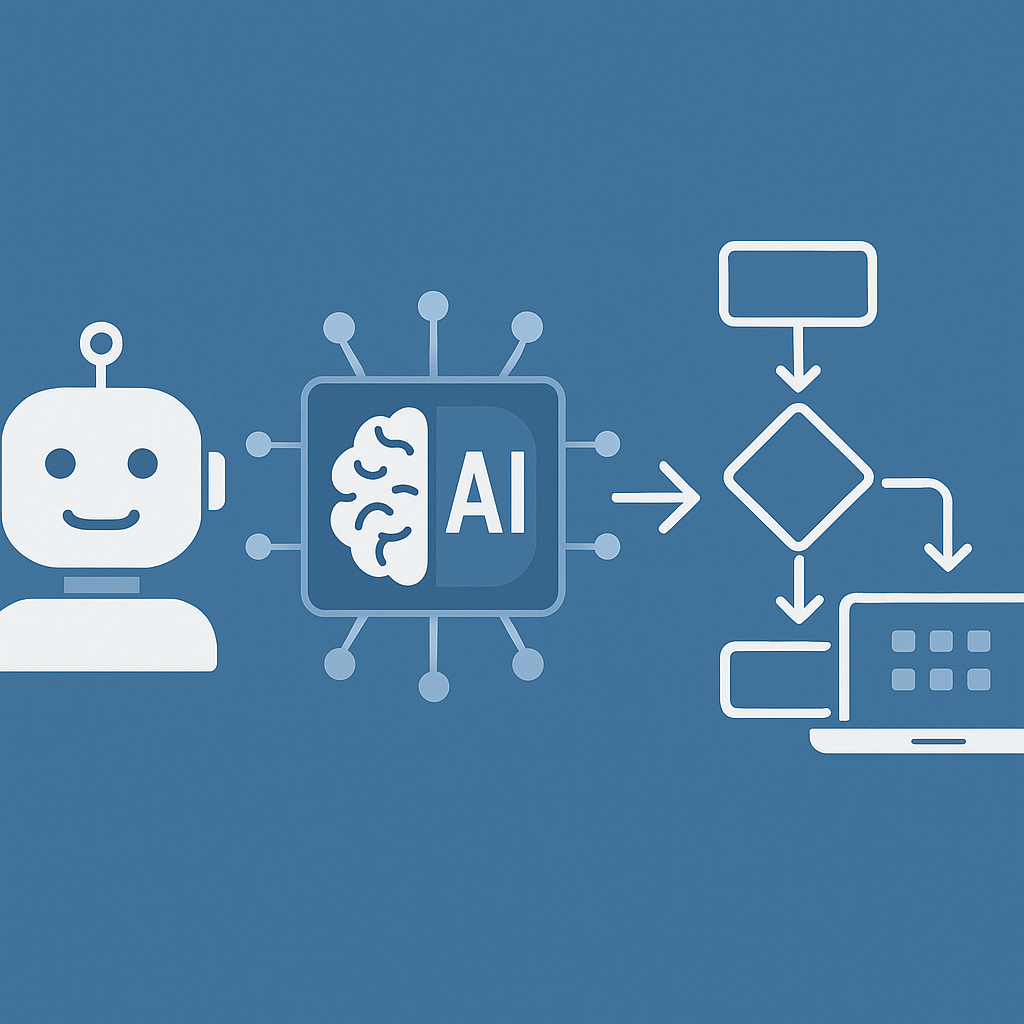
Agentic AI Is Eating Software: What It Actually Means for Your Business
Agentic AI is not a trend. It is a shift in how software works — and it is already changing which businesses grow and which ones fall behind.
Most small-business owners have heard of AI by now. Some are using it. But "agentic AI" is a term that gets tossed around at tech conferences and in venture capital newsletters like everyone already knows what it means. They don't. And that gap — between the people who understand it and the people who don't — is where opportunity is being won and lost right now.
This post explains what agentic AI actually means, in plain English. No Silicon Valley jargon. No hype without proof. Just the concept, why it matters, and what it means for your business.
What Is Agentic AI?
Here is the simplest definition: agentic AI is AI that takes action on its own, in sequence, to complete a goal.
Standard AI — the kind most people have used — answers questions. You type a prompt. It responds. That is the end of the interaction. It is reactive. You ask, it answers, it stops.
Agentic AI works differently. You give it a goal. It figures out the steps. It takes those steps. It checks its own work. It adjusts. It keeps going until the job is done.
"Agent" is the key word. In this context, an agent is something that acts. It does not wait to be asked for each individual step. It has a task, a set of tools, and the ability to make decisions along the way.
Think of it this way. A standard AI is like a very smart employee who will only do exactly what you tell them, one instruction at a time, and stops the moment you stop talking. An agentic AI is like an employee you can hand a project to, walk away from, and come back to find it finished — because they figured out what needed to happen and did it.
That is the agentic AI meaning in plain terms. And it is a fundamentally different kind of software.
Agentic AI vs Generative AI: What Is the Difference?
This distinction matters. Most people are familiar with generative AI — tools like ChatGPT, Claude, or image generators. Generative AI creates content: text, images, code, audio. It is powerful. It is useful. But it is still mostly reactive.
You prompt it. It generates. Done.
When comparing agentic AI vs generative AI, the key difference is autonomy and sequence.
Generative AI produces an output. Agentic AI completes a workflow.
Here is a concrete example. Say you want to follow up with every lead who filled out a form on your website but never booked a call.
With generative AI, you could ask it to write a follow-up email. It writes one. You send it manually. That is one output, one prompt, one action.
With agentic AI, the system identifies the leads who never booked, pulls their contact information, writes personalized follow-up messages based on what each person filled out, sends those messages at the right time, waits for responses, updates your CRM, flags the ones who replied, and schedules the next step. All of it. No one sitting at a keyboard running each step manually.
That is the difference. Generative AI is a tool you use. Agentic AI is a system that runs.
Why This Matters More for Small Businesses Than for Anyone Else
Large corporations have always been able to throw headcount at problems. They hire teams of people to manage follow-up, handle intake, route leads, produce content, and run operations. You probably cannot do that.
You are running a business with a lean team. You are the owner, the operator, and sometimes the person answering the phone. Every hour you spend on admin is an hour you are not spending on the work that actually grows the business.
Agentic AI closes that gap.
It does not replace your judgment. It handles the execution. The repeatable, sequential tasks that eat up your team's time — intake, follow-up, scheduling, content production, triage — those are exactly the tasks agentic systems are built for.
Salmon HVAC was stuck between $80,000 and $100,000 per month. They had a strong reputation and a solid service. What they did not have was a system that could respond to leads instantly, follow up without fail, and produce content consistently. We installed AI systems inside their business — a 24/7 AI receptionist, instant SMS follow-up, and an SEO content engine. Response time dropped to under 60 seconds. Website traffic grew 300%. Organic leads grew 214%. Revenue climbed past $250,000 per month. The business did not add a full team to make that happen. The systems did the work.
That is what agentic AI use cases look like in a real business. Not a demo. Not a pilot program. A system running inside the business, taking action, producing results.
Agentic AI Use Cases for Service-Based Businesses
You do not need to be a tech company to use this. Here are the most common places agentic AI is already producing results for businesses like yours.
Lead follow-up. A lead submits a form at 9:47 PM on a Saturday. An agentic system identifies the lead, sends a personalized SMS within seconds, qualifies them with a few smart questions, and books the appointment — all before your competitor's office opens Monday morning. Apex Construction Group cut their average response time from 31 hours to 8.5 hours after installing this kind of system. Their win rate jumped from 18% to 26%, and they closed $803,000 in new contracts.
Job and lead prioritization. Not every inquiry is worth the same. Bright Solutions was treating a $200 repair call the same as a $5,000 panel upgrade. An agentic triage system flagged high-value work, routed it correctly, and automated ballpark estimates. Their average ticket went from $840 to $1,190. High-value jobs increased by 67%. They added $44,200 per month in revenue.
Appointment and consultation management. Premier Home Remodels was losing deals because leads went cold before anyone called back. Their response time averaged 12 to 36 hours. After installing an AI consultation system that collected scope and budget details up front, routed inquiries to the right project manager, and sent pre-consultation confirmations, response time dropped to one hour. Show rate went from 61% to 84%. They added $312,000 in quarterly revenue.
Content and SEO production. An agentic content system does not just write one article when you ask for it. It researches keywords, identifies gaps, produces content on a consistent schedule, and updates existing pages. Ashley Buckner, a licensed therapist, used AI content systems to post consistently and at higher quality. Within 10 months she had 30,000 Instagram followers, tripled her demand, and doubled her prices.
CRM and operations. Art of Drawers was drowning in manual data entry with a legacy CRM system. We built a custom AI system that populated leads directly into their existing CRM — no rip-and-replace, no disruption. Manual data entry dropped by more than 50%. Closing rate went from 10% to 30%. They signed eight new contracts in the first 30 days.
The Ownership Problem
Here is the thing most people miss when they hear about AI tools.
A tool you rent is not the same as a system you own.
Most AI products on the market are software-as-a-service. You pay monthly for access. The system lives on someone else's servers, in someone else's account. The day you stop paying, it disappears — along with your automations, your follow-up sequences, and your lead history.
That is the same model as the traditional agency. You are renting results instead of building them into your business.
The right approach to agentic AI is different. Every system gets built inside your own tech stack. Your accounts. Your tools. Your data. When the work is done, you own all of it. An agentic system installed inside your business is a business asset — not a subscription you are one invoice away from losing.
That distinction is not a small one. It is the difference between renting a competitive advantage and building one.
The Window Is Open. It Will Not Stay Open.
Agentic AI is not theoretical. It is operational, today, inside businesses that are growing faster than their competitors because they made the decision to adopt early.
The businesses that wait are not standing still. They are falling behind. Every month a competitor runs agentic systems for lead follow-up, content production, or job triage is a month they are widening the gap.
You do not need to understand every technical detail of how these systems work. You need to understand what they do: they take action, in sequence, on your behalf — so you can focus on the work that actually requires you.
Ready to Own the Systems That Run Your Business?
Disruptors Media is a fractional Chief AI Officer service. We audit your business, identify the highest-ROI gaps, and install agentic AI systems directly inside your tech stack — systems you own, not rent.
Book a free consultation at consult.disruptorsmedia.com or email kyle@disruptorsmedia.com.
No long-term contract. No bloated retainer. Just systems built inside your business that work every day, whether you are in the office or not.